

Trip Preparation
Trip Participants

Welcome to the 410 Bridge Family!
Thank you so much for deciding to join us on this mission trip—it’s going to be an incredible journey, and we are so grateful to have you on board!
We know that it is a huge commitment of your time and resources, and we are honored that you have chosen to travel with us.
Trip Preparation
Trip Preparation
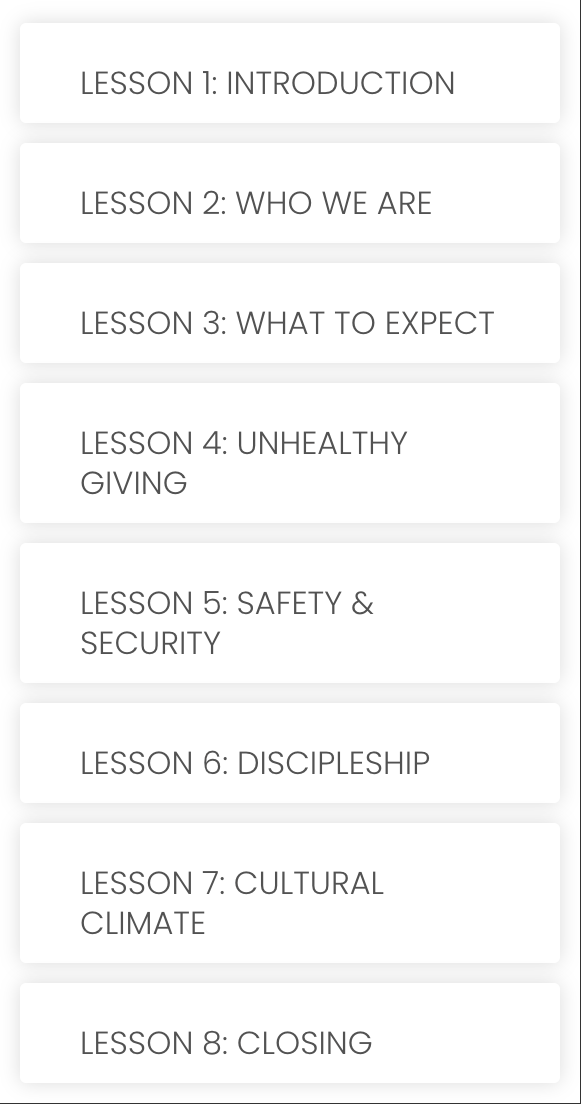
Mission Trip Training
Mission Trip Training
Frequently Asked Travel Questions
-
What qualifications do I need to go on a trip?
The ability to be flexible, be a team player, and be ready to connect with those in the community you are visiting.
-
Can we serve as a family, and if so, what is the youngest recommended age?
We offer opportunities to serve as families, either through an open trip or through your church or business. We recommend that children be at least 5 years old.
-
How long is a typical trip?
Trips to Kenya are typically 10 days, trips to Guatemala are typically 8 days, and trips to the Dominican Republic are typically 7 days. This may vary depending on your church or organization.
-
What will we do on the trip?
Our main goal for mission teams is to build relationships with the community. The Leadership Council will establish your team’s itinerary, and you will participate in ongoing programs, projects, and relational activities.
-
What if my church or business does not partner with 410 Bridge, but I want to travel on a trip?
We would love to have you! Send any trip-related questions to Trips@410bridge.org, and our team will get back to you as soon as possible.
-
What are we going to build?
Unlike other mission trips that focus on constructing buildings, a 410 Bridge trip is all about building up people. We emphasize creating deep, meaningful relationships and walking alongside communities in activities they choose.
Our goal is to inspire and encourage one another in our faith while celebrating and sharing our unique gifts and talents. You will make lasting connections and help empower others.
-
If I have to cancel my trip, can I get a refund?
The 410 Bridge is a registered 501(c)(3) nonprofit organization, so we are unable to provide refunds. Any cancellation will result in the loss of your deposit and may include additional cancellation fees based on The 410 Bridge Cancellation Policy.
-
What is covered in the cost of my trip?
The ground cost of the trip includes:
- An in-country team leader
- International medical insurance
- Lodging
- Meals
- Bottled water
- Translators
- Private ground transportation while in-country
A safari is also included at the end of our Kenya trips.
Optional round-trip airfare is available upon request.
-
What is not included in the cost of my trip?
Snacks, specialty drinks, and souvenirs are not included in the overall trip cost.
-
Do I need to obtain a visa before our trip?
Visas are required for Kenya and must be purchased before arriving in the country. A single-entry eVisa can be purchased for $51. Contact your team leader for additional information.
The visa is not included in the cost of your trip.
-
How much spending money should I bring?
The amount is up to each individual. Credit cards are not widely accepted, so we suggest bringing between $100 and $200 in cash.
In Kenya, U.S. currency must be exchanged for local currency, and U.S. bills must be from 2003 or newer.
In Guatemala, U.S. bills in denominations of $10 or less are accepted, so exchanging money is not necessary for shopping in Antigua. However, you will need local currency if you want to tithe or purchase snacks during the drive.
-
Will we have the opportunity to shop?
Shopping time is planned into each itinerary. Souvenirs can also be purchased at the airport before departure.
-
Do I need immunizations?
There are currently no required immunizations for travelers from the United States entering Kenya or Guatemala. However, the CDC recommends several vaccines.
Proof of yellow fever vaccination is required when entering Kenya from a country with a risk of yellow fever. This does not include the United States.
A list of recommendations can be found on the Centers for Disease Control and Prevention website. Please contact your healthcare provider or local public health department to determine the best options for you.
For information about malaria, consult the CDC’s guidance to determine the relative risk for U.S. travelers visiting your destination. We also suggest carrying a copy of your immunization card as an extra precaution.
-
What about safety?
The safety of our teams is a top priority at The 410 Bridge. Our U.S. and in-country staff are trained and equipped to provide a safe and well-supported mission experience.
Throughout your trip, your team will be accompanied by experienced staff who have access to transportation, communication, medical resources, and emergency contacts.
In the event of an emergency, the 410 Bridge staff will guide your team through the appropriate next steps and provide support every step of the way.
-
What if I don’t know the language?
A 410 Bridge staff member or translator will always be available to assist your group. However, do not be afraid to try speaking the local language. Community members will appreciate your attempts to communicate in their language.
-
What kind of food will we eat?
The food will be a combination of local cuisine and American food. Breakfast and dinner are typically served buffet-style, while lunch usually consists of sandwiches and fruit.
-
What are some things I need to know about the food and water?
Three meals a day are always provided. The 410 Bridge carefully selects restaurants, guesthouses, and hotels where food is prepared safely.
The water is safe to drink at the restaurants, guesthouses, and hotels where we take teams. Bottled water is also provided each day, though there may be a small fee for sodas or bottled water ordered from the hotel or guesthouse during meals.
We recommend bringing a reusable water bottle, especially when traveling to the Dominican Republic.
If you have specific tastes or want something to snack on between meals, feel free to pack a few of your own.
-
What if I have food allergies?
Please make sure we know about any allergies, dietary restrictions, or dietary preferences before your trip.
Our in-country staff will do their best to accommodate your needs, but you may want to pack snacks to supplement your diet.
-
How many bags can I take?
We highly recommend bringing only a carry-on bag and a personal item.
If you need to check a bag, consult your airline for its baggage guidelines and pricing.
Please do not pack gifts or clothing to leave behind. Refer to the Participant Covenant for our policy regarding individual giving.
-
Do I need an electrical adapter?
Electrical outlets in Kenya use 210–220 volts. You will need an adapter to plug in your devices.
Many newer rechargeable cameras, laptops, and other electronic devices can operate on both 110 and 220 volts.
Some items, such as hair dryers, can be switched from one voltage to another. If your device cannot, you will also need a converter to change the voltage.
Hair dryers are not provided in the hotels, so please plan accordingly.
-
Will I have Wi-Fi or cell service?
Wi-Fi availability varies by hotel and country. Some hotels offer Wi-Fi throughout the property, while others may only have Wi-Fi available in the lobby or common areas.
Because internet access may be limited, we recommend checking with your mobile carrier about international calling and data plans before you travel if you would like to stay connected during your trip.
-
What will the weather be like?
Kenya’s weather is generally warm, but temperatures vary by location and elevation. Many of our partner communities experience warm days and cooler mornings and evenings, so we recommend dressing in layers. Kenya’s cooler season generally falls during the U.S. summer months (June through August). Rain is possible throughout the year, so a lightweight rain jacket is also recommended.
Guatemala has a tropical climate, with warm temperatures in the lowlands and cooler weather in the mountainous regions where many of our partner communities are located. Dressing in layers is recommended. The rainy season typically lasts from May through November.
The Dominican Republic has a warm, tropical climate year-round. Expect hot, humid days with the possibility of brief rain showers, especially from May through November. Lightweight clothing and a light rain jacket are recommended.
-
How long does it take to get there?
Kenya: Most teams fly into Nairobi (NBO). Flights from Atlanta typically take 18–21 hours, including connections.
Guatemala: Most teams fly into Guatemala City (GUA). Flights from Atlanta typically take 3.5–4 hours, while flights from Miami are approximately 2.5–3 hours.
Dominican Republic: Teams may fly into either Punta Cana (PUJ) or Santo Domingo (SDQ). Flights from Atlanta are typically 3–4 hours, while flights from Miami are approximately 2–2.5 hours.
Once you arrive in-country, travel time will depend on the location of your community.
-
What are the Kenyan community travel times?
From Nairobi, it will initially take approximately three to five hours to reach the hotel where you will be staying.
Depending on the community you serve, daily travel to the community may take one to two hours based on traffic.
-
What are the Guatemalan community travel times?
If you are serving in the Western Highlands, it will take approximately six to nine hours to reach your first stop. The following day, it may take another three to six hours to reach the community.
Depending on the community and traffic, daily travel will take approximately one hour.
If you are serving in San Martín, it will take approximately three to five hours to travel there from the airport and about one hour to reach the community each day.
-
What are the Dominican Republic community travel times?
If your team flies into Punta Cana, the drive to the hotel is about 2 hours.
If your team flies into Santo Domingo, the drive to the hotel is about 45 minutes.
From the hotel, our partner communities are typically 45 minutes or less away.
-
Who will meet me at the airport?
A 410 Bridge staff member and a driver will meet you outside the airport, just beyond baggage claim. They will either be wearing a shirt with The 410 Bridge embroidered logo or holding a 410 Bridge sign.
Once you have connected with our staff, your group will be transported to your lodging for the night. Your driver and 410 Bridge staff member will remain with you throughout your trip.
-
Where will we be staying?
410 Bridge teams stay in hotels selected by our in-country staff. We choose lodging that provides the services we need and is as close as possible to your service destination.
You may still need to travel some distance each day to reach the 410 Bridge community.
Teams arriving late will spend their first night in a hotel or guesthouse near the airport and then travel to the service community the following morning.
-
What will we do at night when we return to the hotel?
This is downtime for the team to relax and process what you experienced during the day.
The team will have dinner together, debrief, and regroup for the following day. You will likely be tired, so plenty of rest is recommended.
-
How do sleeping arrangements work?
Team members are typically booked in hotel rooms with two people of the same gender per room.
If a single room is needed, we may be able to accommodate the request for an additional cost.
-
Why does 410 Bridge prohibit unhealthy giving?
We prohibit individual giving to protect the health of the relationships within our communities.
The 410 Bridge has a strict policy prohibiting individual giving of any kind. Following this policy is crucial to the long-term success of our communities.
-
Can I give my personal contact information to the people I meet?
Personal contact information should not be given to anyone you meet during the trip. This includes connecting on social media with community members, 410 Bridge in-country staff, translators, and drivers.
We encourage building relationships. If you would like to communicate with someone you meet, you may send letters to The 410 Bridge office, and we will deliver them for you.
It is important to understand that once personal contact information is exchanged, it may be distributed to others in the community who are seeking unhealthy Western support.
No questions in this category yet.